

Pet Microchipping in Thompson’s Station, TN
Every year, thousands of pets go missing, and not knowing where your pet is can be a helpless, hopeless feeling. At Tollgate Animal Hospital, we offer microchipping, a simple, safe, and effective way to give your pet permanent identification and greatly improve the chances of bringing them home if they ever become lost.
How Pet Microchips Work
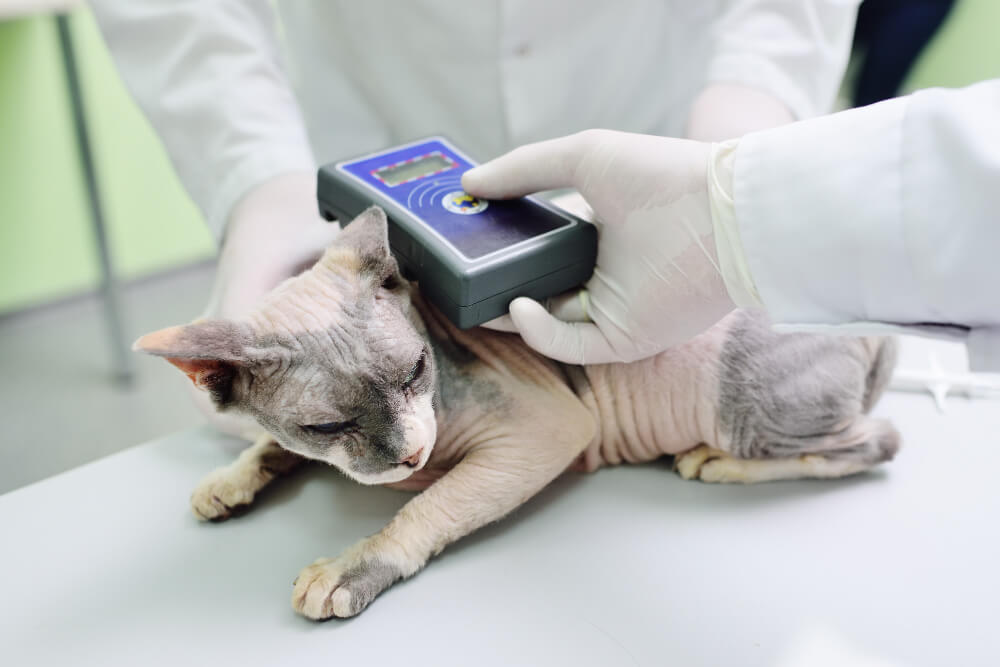
A microchip is a tiny device, about the size of a grain of rice, that is placed just beneath your pet’s skin, usually between the shoulder blades. Each chip contains a unique identification number. When a lost pet is brought to a veterinary hospital or animal shelter, staff use a scanner to read the number and look up the owner’s contact information in the microchip registry.
Unlike collars and tags, which can fall off or be removed, a microchip stays with your pet for life. It doesn’t require batteries and works for your pet’s entire lifetime.
A Quick, Safe Procedure
Microchipping is a standard procedure that is relatively fast and completely safe. The chip is placed with a needle, similar to a routine vaccination, and most pets react no more than they would to a regular shot. It can be done during a wellness exam, a vaccination visit, or while your pet is under anesthesia for a spay or neuter.
Keep Your Contact Information Up to Date
A microchip is only as helpful as the information connected to it. After your pet is chipped, be sure to register the chip and update your phone number and address whenever they change. We recommend checking your registration once a year.
Who Should Be Microchipped?
We recommend microchipping for all dogs and cats, including indoor cats, who can slip out an open door. Puppies and kittens can be microchipped at a young age, often at their first visits. New to our hospital? Learn more on our New Clients page.
Pet Microchipping FAQs
Does microchipping hurt my pet?
Microchipping feels similar to a routine vaccine. Most pets tolerate it well with only brief discomfort.
Is a microchip a GPS tracker?
No. A microchip does not track your pet’s location. It stores an ID number that links to your contact information when scanned.
How long does a microchip last?
Microchips are designed to last for your pet’s lifetime and do not need batteries or replacement.
Can indoor cats benefit from microchipping?
Yes. Indoor cats can escape through open doors or windows, and a microchip helps ensure they can be identified and returned.
When can my puppy or kitten be microchipped?
Puppies and kittens can be microchipped at a young age, often during an early wellness visit or at the time of spay or neuter.
What should I do after my pet is microchipped?
Register the microchip with your contact information and update it any time your phone number or address changes.
Can you scan my pet to check for an existing microchip?
Yes. We can scan your pet during a visit to confirm a chip is present and working.
Protect Your Pet With a Microchip
Give your pet a permanent way home. Call Tollgate Animal Hospital at (615) 241-6300 or request an appointment online to schedule microchipping.